The Situation With Semiconductors is Not Good: AMD, Nvidia and Intel Faced Some Problems

Aug 26, 2022
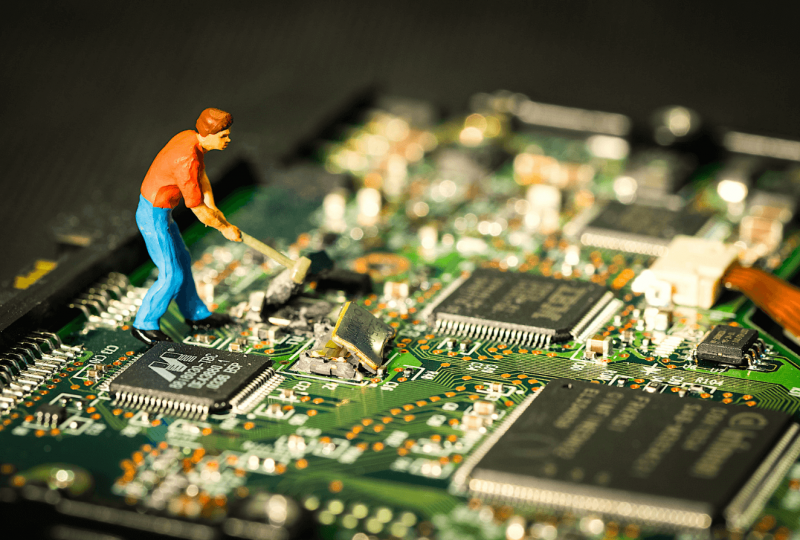
The Situation With Semiconductors is Not Good: AMD, Nvidia and Intel Faced Some Problems

It has been confirmed by the recent second-quarter earnings season that the semiconductor manufacturers are facing difficult times. The performance reports from the three major market players, AMD, Nvidia, and Intel, were wildly inconsistent. Even if the numbers for Advanced Micro Devices were favorable, they still came far short of allaying investors' anxieties.

Despite a significant decline in personal computer sales, Advanced Micro Devices increased its revenue by 70% yearly to $6.6 billion. Strong demand from data centers has been advantageous for the organization.

However, Micron and Qualcomm both failed to convey that the sector's momentum would not be considerably diminished by the economic downturn and perhaps an impending recession.

How It Happened

The chipmakers were anticipated to see healthy sales for at least ten years. That perspective has significantly evolved.

However, research company Gartner recently revised downward its sectoral sales growth projections, practically halving them for 2022.

The current forecast is for a 7.4% increase in global semiconductor revenue to $639 billion in 2022. That percentage prediction is lower than the actual growth rate for 2021, which was 26.3%. Additionally, it is lower than the second quarter prediction that chip sales would increase 13.6% overall in 2022.

Gartner also advised forgetting about growth in 2023. The research company in Stamford, Connecticut, anticipates a 2.5% decline in overall chipmaker revenue.

"The global semiconductor sector is entering a phase of weakness that will last through 2023, when semiconductor revenue is predicted to decrease 2.5%, “according to Richard Gordon, practice vice president at Gartner, even if chip shortages are subsiding.

"In semiconductor end markets, particularly those that are dependent on consumer spending, we are already observing deterioration"Consumer disposable income is under pressure from rising energy and fuel prices, taxes, interest rates, and inflation. This is impacting spending on technological goods like PCs and cell phones.

The industry has seen high demand during the post-pandemic recovery; in fact, shortages for some types of chips still exist, while surpluses have flooded other industries.

According to Gartner, there will be declines in the personal computer and smartphone industries in 2022 (by 9.5% and 7.1%, respectively), causing Intel and AMD, in particular, to lower their projections. The demand for chips designed for computer servers is increasing (20% increase), even while demand for CPUs and DRAM memory drops.

The demand for electric battery chips continues to outpace supply. However, Micron has just lowered its projected sales for the current quarter.

Other Side of The Coin

The struggles of the semiconductor industry are best shown by Nvidia, which attributes a sizable portion of its revenue to the gaming, cryptocurrency, and metaverse businesses.

According to a news release, Nvidia was able to boost its sales in the second quarter by 3% year over year to $6.7 billion.

Nvidia, is currently experiencing a huge amount of graphics cards, the reverse of the historical trend. It still has an excessive amount of RTX 3000 graphics cards in stock. The decrease in consumer and miner demand over the previous three months is what has caused the overstock.

In an effort to get rid of them before introducing the following generation, the corporation will lower the price of such cards. The RTX 4000s, the upcoming generation of graphics cards, claim to be twice as powerful as the ones we already have.

The abrupt decrease in consumer demand was caused by global macroeconomic challenges, according to Chief Financial Officer Colette Kress's remarks to analysts on August 24.

"In order to alter channel pricing and price-position current high-end desktop GPUs as we get ready to introduce a new architecture, we created programs with our gaming channel partners. As mentioned in the previous quarter, we had anticipated a declining contribution from crypto to the market for video games."

We are managing our supply-chain transformations in a hard macro climate, but we will get through this, said Jensen Huang, the company's founder and chief executive.

Subscribe Our Newsletter

China’s Smartphone Market Hits Lowest Point

Alexander

China’s Smartphone Market Hits Lowest Point in a Decade in 2022

Sales of smartphones in China dropped drastically in 2022 due to the negative economic situations and implications of tight COVID-19 measures.

Companies
South Korean CBDC – 7 South Korean Banks to Join Issuing The Digital Currency Since cryptocurrencies arrived on the financial scene and changed how people transact and transfer money, central banks have become more interested in developing their own virtual payment systems. After Russia, China, Nigeria, India, and Jamaica, South Korea is taking a major step toward introducing its own Central Bank Digital Currency in an upcoming pilot program involving the public and some major banks. The initiative aims to test the feasibility of a digital currency within the existing financial system, enabling a limited number of citizens to transact with CBDC at selected merchants and Points of Sale. This move aligns with the global trend of central banks exploring digital currencies to enhance payment efficiency, reduce transaction costs, and modernize the financial landscape. South Korea CBDC Pilot Program Bank of Korea (BOK), in collaboration with financial regulators, announced an initiative to test the rolling out of CBDC involving seven major banks and 100,000 participants. The pilot program “Project Hangang” is scheduled to run from April to June 2025, focusing on testing deposit tokens issued by banks and backed by the CBDC. These banks include KB Kookmin Bank, Shinhan Bank, Hana Bank, Woori Bank, NH NongHyup Bank, Industrial Bank of Korea (IBK), and Busan Bank. These tokens will be used for transactions in both online and offline retail environments, allowing the government and financial institutions to evaluate their effectiveness. Users and Merchants Participation The BOK is expected to announce the project by the end of March, asking 100,000 South Koreans to participate in the pilot and convert their traditional bank deposits into digital tokens for payments. Individuals will be limited to a maximum holding of 1 million WON (approximately $687) and a total transaction cap of 5 million WON during the trial’s duration. Various merchants, including convenience stores, supermarkets, coffee shops, and online platforms, will accept these tokens as payment. Notable participants include 7-Eleven, Hanaro Mart, Ediya Coffee, Silla University, and Hyundai Home Shopping. This will help assess the practicality and usability of the CBDC across different retail settings. Global Adoption of CBDC The South Korean CBDC initiative is part of a broader global trend, with many countries exploring digital currencies to modernize their financial systems. The Bank for International Settlements (BIS) has been actively promoting CBDC projects worldwide, with major economies such as China, the European Union, and the United States conducting their own trials. China’s digital Yuan e-CNY is already in an advanced phase, with widespread adoption in various sectors. The European Central Bank is also working on a digital Euro, while the US Federal Reserve is researching the potential implications of a digital Dollar. These initiatives aim to improve payment efficiency, enhance financial inclusion, and strengthen monetary policy frameworks. Conclusion South Korea’s CBDC pilot marks a significant step toward digital financial transformation. By involving the public, key banking institutions, and merchants, the trial will offer critical data on the viability of digital currencies. As more countries explore CBDCs, these findings could influence future implementations worldwide, paving the way for a more efficient payment system.

Hazem

South Korean CBDC – 7 South Korean Banks to Join Issuing The Digital Currency

South Korean CBDC will be tested in a Central Bank-led pilot project involving 100,000 users and 7 issuing banks. Here’s what we know about this project.

Crypto
B2BROKER Liquidity B2BROKER Liquidity
Sponsored
Oto

Explaining Bitcoin Mempool And Its Role in Processing Transactions
Learn about the Bitcoin mempool, where pending transactions await confirmation. This article explores its formation, operations, challenges, and impact on transaction times, fees, and network congestion.

discover
What is The OTC Market, and How to Trade There?

Constantine

Complete Guide to the Over-the-Counter (OTC) Market

Learn about what OTC markets are, how they work, and what types of financial instruments are traded in such markets.

Trading
Contact us bg

Contact Us

Contact the Liquidity Provider
for any questions and advertising inquiriesb2broker

    Please fill out this contact form to get in touch with us

    / 3000

    By clicking “Get in touch” button, you agree to the privacy policy

    Successful!
    Thank you for your request.
    We will contact you shortly.
    Close

    Deborah Middleton

    Understanding Loan Options for Different Financial Situations

    Understanding Loan Options for Different Financial Situations

    Constantin

    How to Create a Website for a Liquidity Provider: Guide 2026

    Create website for liquidity provider

    George

    Best XRP Alternatives Under $5 Right Now: Affordable Coins With Real Growth Potential

    Top XRP Alternatives Under $5 (2025): Low-Cost Coins With Big Growth Potential

    Hazem

    MetaTrader vs cTrader: Which Trading Platform Shall You Choose?

    MetaTrader vs cTrader: The Full Breakdown

    Сonstantine

    Will Dogecoin Reach $1? Tokenomics and Price Analysis

    Will Dogecoin Reach 1 Dollar Analysis

    Сonstantine

    How to Get a Crypto Exchange License?

    How to Get Crypto Exchange License

    Сonstantine

    Best Crypto to Buy Now: Guide for Investors

    Best Crypto To Buy Now

    Hazem

    Grok vs ChatGPT: What’s the Best AI Assistant You Need in 2025

    Grok vs ChatGPT

    Сonstantine

    How to Choose the Right Liquidity Provider for Your Brokerage

    How to Choose the Right Liquidity Provider for Your Brokerage

    Сonstantine

    Low-Latency Trading Defined: Speed, Strategy and Technology

    Low-Latency Trading Explained

    Hazem

    How Liquidity Depth Affects Slippage in High-Volume Trading

    Liquidity depth and slippage in trading

    Hazem

    What is FIX API Liquidity Connection and How Does it Power Institutional Trading?

    FIX API in institutional trading

    Сonstantine

    OTC Trading Strategies and Technologies to Succeed in Over-the-Counter Markets

    OTC Trading Strategies

    Alexander

    What is OTC Trading? A Complete Guide for 2025

    what is OTC

    Alexander

    Synthetic Futures: A Trader’s Guide to Replicating Positions with Options

    How to Trade Synthetic Futures

    Сonstantine

    Order Book Depth: What It Is And Why It Matters?

    Order Book Depth What It is And Why It Matters

    Alexander

    Spot vs Perpetual Futures: Which Is Right for You?

    Spot vs Perpetual Futures explained

    Hazem

    5 Reasons Traders Are Switching to Perpetual Futures

    5 Reasons to Switch to Perpetual Futures

    Constantine

    Top 3 Liquidity Challenges Facing New Exchanges and How to Solve Them

    Top 3 Liquidity Challenges Facing New Exchanges Today

    Constantine

    Financial Planning in the Cryptocurrency Era — Master Crypto and Digital Asset Strategies

    Financial Planning in the Cryptocurrency Era

    Hazem

    Best Platforms to Trade Perpetual Futures in 2025

    Best platforms to trade perpetual futures in 2025

    Alex

    Top 10 Fintech Website Development Agencies for 2025

    Best Fintech Website Development Agencies for 2025

    Сonstantine

    Internal vs External Range Liquidity In ICT Trading Explained

    Internal vs External Range Liquidity In ICT Trading

    Constantine

    Portfolio Backtesting — Tools, Metrics, and Methods Explained

    Portfolio Backtesting
    liquidity-provider-logo
    • News
      • Stock Market Forecast
      • Stocks
      • Banks and Finance
      • Companies
      • Crypto
      • Forex
      • AI
      • Technology
      • DeFi
      • NFT
    • Articles
      • Crypto Payments
      • Trading
      • Crypto Exchange Business
      • Forex Business
      • Fintech
      • Liquidity
      • FinTech Awards
      • Blockchain
      • Investing
      • NFT
      • DeFi
    • More
      • Videos
      • Liquidity Providers List
      • Crypto Payment Providers
      • White Label Brokerage Platforms
      • Broker CRM Platforms
    [email protected]

    © 2024 Liquidity Provider. All Rights Reserved

    Privacy Policy Cookie Policy Website developed by WSA.design
    This site is registered on wpml.org as a development site. Switch to a production site key to remove this banner.