Harris Associates Cuts Ties with Credit Suisse: Bank’s Biggest Shareholder Sells Entire Stake

Mar 06, 2023
Harris Associates Cuts Ties with Credit Suisse: Bank's Biggest Shareholder Sells Entire Stake

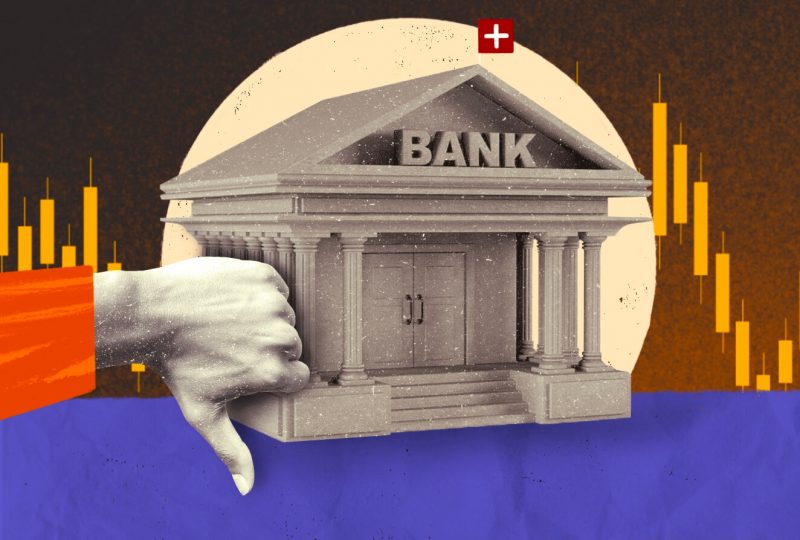
After approximately two decades of ownership, Harris Associates' stock picker David Herro terminated the firm's association with Credit Suisse Group AG by selling off their complete stake in the bank. As a result of this decision, the bank's already problematic situation has become even worse.

Bank's Troubles

Credit Suisse has been enduring a crisis for many months now, and the emergency plan it launched in October was seen by various analysts as the bank's last hope. The strategy centered around asset management business with an aim to cut 9,000 jobs over five years while also slashing its cost base by 14.5 billion Swiss francs within three years.

The bank also intends to divide the investment bank into three segments. The investment bank was once the company's cash cow, but a string of scandals has cost Credit Suisse billions of dollars in losses and regulatory fines.

Moreover, the company is selling a "significant portion" of its Securitized Products Group division.

However, since the launch of its recovery plan, Credit Suisse has endured several scandals that have hindered its attempts at revitalization.

On February 13th, Credit Suisse alerted their employees via email that a former employee held access to the confidential personal data of both current and ex-employees.

This former employee, who had legitimate access to the data during his time in the bank, violated company policy by copying and transferring the data onto a personal hard drive. Currently, the employee does not work at the firm.

The stolen data encompasses employee identifiers, including Social Security numbers and ID tags, alongside contact information, immigration status, dates of birth, and gender. Moreover, the thief has acquired compensation records from 2013 to 2015 for all included personnel — covering both salaries as well as any other variable payments distributed.

Not long after, reports began circulating that FINMA, the Swiss financial regulator, was taking a closer look at statements made by Axel Lehmann, Chairman of the Board of Directors, from last fall.

At the time, Credit Suisse's wealthy Wealth Management clients were rapidly withdrawing their funds due to fears and rumors surrounding the financial strength of the bank. These worries threatened to destabilize what was meant to be a cornerstone of "The New Credit Suisse."

Outflows raised concerns about Credit Suisse's future profitability because if the bank does not have enough assets to handle, its fees will definitely decline.

To restore trust among the bank's clients, Lehmann stated at a conference on December 1st that customer outflows had ceased. He then proceeded in the interview with Financial Times that after large outflows in October, the withdrawals had "fully stabilized" and even began to "revert."

Credit Suisse's Biggest Backer Sells Its Entire Stake

Credit Suisse's 2022 annual and fourth quarter figures showed that 110.5 billion Swiss francs ($119.65 billion) were taken out by customers over the last three months of the year – indicating that customer withdrawals had been ongoing even at Lehmann's time of speaking.

Therefore, the question is: Did Lehman mislead investors to bolster Credit Suisse's share price?

Credit Suisse's stock was already in a downward spiral for several months prior to the news, yet things have only gotten worse. Harris Associates — one of the bank's primary investors over many years — has now divested its entire stake, according to reports from The Financial Times.

David Herro, Chief Investment Officer for international equities at Harris, told a newspaper that rising interest rates have caused a number of European financials to go in the opposite direction. Aside from that, he asked why someone would invest in something that is diminishing capital when the majority of the sector already produces it.

Herro is fiercely critical of Credit Suisse's strategic plan and specifically condemns the suggested investment banking spin-off, citing it as too "cumbersome," which will result in wasteful use of funds.

Harris, a premier Chicago-based investment firm managing an extraordinary $86 billion in assets as of September 30th, 2022, purchased a large portion of Credit Suisse 20 years ago - elevating them to the title of largest shareholder.

After the 2008 financial crisis, American firm Harris Corporation cut its stake to turn a profit. More recently, it has begun to criticize the bank's varied tactics and strategies.

Last January, the firm again reduced its participation below the mandatory reporting threshold of 3%. Harris did not participate in Credit Suisse's capital raise late last year, which diluted its shares. This decision was a sign that the firm was not convinced by the emergency plan of the Credit Suisse.

After Harris Associates left Credit Suisse's largest shareholder seat, the Saudi National Bank took its place as the biggest investor.

Subscribe Our Newsletter

long-Term Tech Stocks in 2024

Otar

Identifying the Best Long-Term Tech Stocks in 2024

Discover the top long-term tech stocks for 2024, along with tips on risk management, value investing, and top performers in the tech industry.

Stocks
South Korean CBDC – 7 South Korean Banks to Join Issuing The Digital Currency Since cryptocurrencies arrived on the financial scene and changed how people transact and transfer money, central banks have become more interested in developing their own virtual payment systems. After Russia, China, Nigeria, India, and Jamaica, South Korea is taking a major step toward introducing its own Central Bank Digital Currency in an upcoming pilot program involving the public and some major banks. The initiative aims to test the feasibility of a digital currency within the existing financial system, enabling a limited number of citizens to transact with CBDC at selected merchants and Points of Sale. This move aligns with the global trend of central banks exploring digital currencies to enhance payment efficiency, reduce transaction costs, and modernize the financial landscape. South Korea CBDC Pilot Program Bank of Korea (BOK), in collaboration with financial regulators, announced an initiative to test the rolling out of CBDC involving seven major banks and 100,000 participants. The pilot program “Project Hangang” is scheduled to run from April to June 2025, focusing on testing deposit tokens issued by banks and backed by the CBDC. These banks include KB Kookmin Bank, Shinhan Bank, Hana Bank, Woori Bank, NH NongHyup Bank, Industrial Bank of Korea (IBK), and Busan Bank. These tokens will be used for transactions in both online and offline retail environments, allowing the government and financial institutions to evaluate their effectiveness. Users and Merchants Participation The BOK is expected to announce the project by the end of March, asking 100,000 South Koreans to participate in the pilot and convert their traditional bank deposits into digital tokens for payments. Individuals will be limited to a maximum holding of 1 million WON (approximately $687) and a total transaction cap of 5 million WON during the trial’s duration. Various merchants, including convenience stores, supermarkets, coffee shops, and online platforms, will accept these tokens as payment. Notable participants include 7-Eleven, Hanaro Mart, Ediya Coffee, Silla University, and Hyundai Home Shopping. This will help assess the practicality and usability of the CBDC across different retail settings. Global Adoption of CBDC The South Korean CBDC initiative is part of a broader global trend, with many countries exploring digital currencies to modernize their financial systems. The Bank for International Settlements (BIS) has been actively promoting CBDC projects worldwide, with major economies such as China, the European Union, and the United States conducting their own trials. China’s digital Yuan e-CNY is already in an advanced phase, with widespread adoption in various sectors. The European Central Bank is also working on a digital Euro, while the US Federal Reserve is researching the potential implications of a digital Dollar. These initiatives aim to improve payment efficiency, enhance financial inclusion, and strengthen monetary policy frameworks. Conclusion South Korea’s CBDC pilot marks a significant step toward digital financial transformation. By involving the public, key banking institutions, and merchants, the trial will offer critical data on the viability of digital currencies. As more countries explore CBDCs, these findings could influence future implementations worldwide, paving the way for a more efficient payment system.

Hazem

South Korean CBDC – 7 South Korean Banks to Join Issuing The Digital Currency

South Korean CBDC will be tested in a Central Bank-led pilot project involving 100,000 users and 7 issuing banks. Here’s what we know about this project.

Crypto
B2BROKER Liquidity B2BROKER Liquidity
Sponsored
Alexander

Simple and Compound Interest — How Do They Differ?
If you're taking out a loan or depositing money in a savings account, you should know about different types of interest and how they are calculated. This knowledge can empower you to make informed financial decisions and potentially save or earn more money in the long run.

discover
How to Generate Passive Income with DeFi in 2024

Alexander

How to Earn Passive Income with DeFi in 2024?

DeFi space is rapidly evolving, creating new opportunities for investors worldwide. Learn how to make money with DeFi passive income strategies in 2024.

DeFi
Contact us bg

Contact Us

Contact the Liquidity Provider
for any questions and advertising inquiriesb2broker

    Please fill out this contact form to get in touch with us

    / 3000

    By clicking “Get in touch” button, you agree to the privacy policy

    Successful!
    Thank you for your request.
    We will contact you shortly.
    Close

    Deborah Middleton

    Understanding Loan Options for Different Financial Situations

    Understanding Loan Options for Different Financial Situations

    George

    Best XRP Alternatives Under $5 Right Now: Affordable Coins With Real Growth Potential

    Top XRP Alternatives Under $5 (2025): Low-Cost Coins With Big Growth Potential

    Hazem

    MetaTrader vs cTrader: Which Trading Platform Shall You Choose?

    MetaTrader vs cTrader: The Full Breakdown

    Сonstantine

    Will Dogecoin Reach $1? Tokenomics and Price Analysis

    Will Dogecoin Reach 1 Dollar Analysis

    Сonstantine

    How to Get a Crypto Exchange License?

    How to Get Crypto Exchange License

    Сonstantine

    Best Crypto to Buy Now: Guide for Investors

    Best Crypto To Buy Now

    Hazem

    Grok vs ChatGPT: What’s the Best AI Assistant You Need in 2025

    Grok vs ChatGPT

    Сonstantine

    How to Choose the Right Liquidity Provider for Your Brokerage

    How to Choose the Right Liquidity Provider for Your Brokerage

    Сonstantine

    Low-Latency Trading Defined: Speed, Strategy and Technology

    Low-Latency Trading Explained

    Hazem

    How Liquidity Depth Affects Slippage in High-Volume Trading

    Liquidity depth and slippage in trading

    Hazem

    What is FIX API Liquidity Connection and How Does it Power Institutional Trading?

    FIX API in institutional trading

    Сonstantine

    OTC Trading Strategies and Technologies to Succeed in Over-the-Counter Markets

    OTC Trading Strategies

    Alexander

    What is OTC Trading? A Complete Guide for 2025

    what is OTC

    Alexander

    Synthetic Futures: A Trader’s Guide to Replicating Positions with Options

    How to Trade Synthetic Futures

    Сonstantine

    Order Book Depth: What It Is And Why It Matters?

    Order Book Depth What It is And Why It Matters

    Alexander

    Spot vs Perpetual Futures: Which Is Right for You?

    Spot vs Perpetual Futures explained

    Hazem

    5 Reasons Traders Are Switching to Perpetual Futures

    5 Reasons to Switch to Perpetual Futures

    Constantine

    Top 3 Liquidity Challenges Facing New Exchanges and How to Solve Them

    Top 3 Liquidity Challenges Facing New Exchanges Today

    Constantine

    Financial Planning in the Cryptocurrency Era — Master Crypto and Digital Asset Strategies

    Financial Planning in the Cryptocurrency Era

    Hazem

    Best Platforms to Trade Perpetual Futures in 2025

    Best platforms to trade perpetual futures in 2025

    Alex

    Top 10 Fintech Website Development Agencies for 2025

    Best Fintech Website Development Agencies for 2025

    Сonstantine

    Internal vs External Range Liquidity In ICT Trading Explained

    Internal vs External Range Liquidity In ICT Trading

    Constantine

    Portfolio Backtesting — Tools, Metrics, and Methods Explained

    Portfolio Backtesting

    Сonstantine

    ICT Trading Explained: Smart Money Concepts, Tools and Setups

    ICT Trading Explained
    liquidity-provider-logo
    • News
      • Stock Market Forecast
      • Stocks
      • Banks and Finance
      • Companies
      • Crypto
      • Forex
      • AI
      • Technology
      • DeFi
      • NFT
    • Articles
      • Crypto Payments
      • Trading
      • Crypto Exchange Business
      • Forex Business
      • Fintech
      • Liquidity
      • FinTech Awards
      • Blockchain
      • Investing
      • NFT
      • DeFi
    • More
      • Videos
      • Liquidity Providers List
      • Crypto Payment Providers
      • White Label Brokerage Platforms
      • Broker CRM Platforms
    [email protected]

    © 2024 Liquidity Provider. All Rights Reserved

    Privacy Policy Cookie Policy
    This site is registered on wpml.org as a development site. Switch to a production site key to remove this banner.