What is Prime of Prime Liquidity?

Nov 1, 2021

What is Prime of Prime Liquidity?

Liquidity is among the core components for brokerage companies that enter financial markets. The characteristic is important enough for diverse instruments, including Forex, cryptocurrencies, metals, commodities, equities, etc.

Traders associate high liquidity with better chances to capitalize on buying and selling assets, while low liquidity leads to overvalued spreads, gaps, and price slippage. What should a brokerage business owner take into account?

Why can’t brokers function without liquidity aggregation?

When a newer brokerage company appears on the “trading map,” clients expect to find the best conditions there. Bid and ask orders placed by traders should be executed within milliseconds; otherwise, your clients face price slippage and gaps that ruin trading strategies.

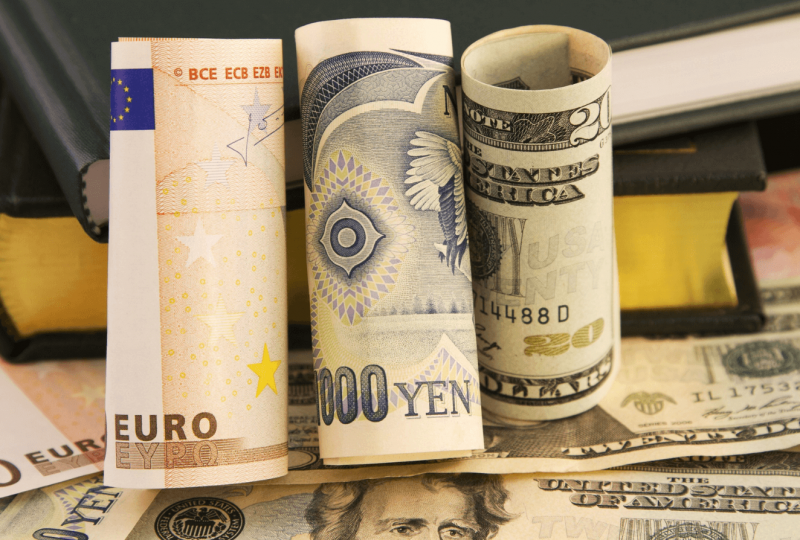
FX liquidity providers connect brokers to high liquidity pools, where major market makers execute orders of your traders directly. For instance, a client places an order for 1 JPY/USD lot, and this order is executed by JP Morgan Chase by the market price. Traders face minimum spreads and enjoy the best conditions.

Is there another option for brokerage businesses? Some companies rely on their order books, acting as market makers themselves. When a trader places a bid or ask order, he (she) needs the system to find the corresponding order placed by another trader. The model is successful when a company hosts more than 1 million active traders; nevertheless, gaps and high spreads are still possible for trading pairs with low popularity.

Types of liquidity providers

Brokerage businesses cannot access the market liquidity without the helping hand of providers, as the largest banks and funds deal with huge trading volumes only.

The list of liquidity providers (LPs) is roughly divided into two categories:

1) Tier 1 LPs. Such providers connect brokerage businesses with top-rated market makers (Bank of America, Morgan Stanley, Goldman Sachs, and other major players of the Forex market).

2) Tier 2 LPs. These companies are called Prime brokers as well. Tier 2 providers open accounts in major banks (Prime brokers select one banking institution or several companies), and then grant access to retail brokers.

In both cases brokerage businesses do not execute their clients’ orders; this is why prices and quotes are distributed directly from major players.

Prime of Prime liquidity: explanation

On top of the given LP categories, brokers may deal with Prime of Prime liquidity providers that offer the best industry conditions.

What is the main idea of such providers? PoP companies build their own liquidity pools and connect major players of financial markets. For instance, the FX liquidity pool unites the top-rated banks, Prime brokers, dark pools, non-bank liquidity providers, etc. As for the liquidity pool for equities, PoP providers gather DMA providers, clearing houses, LPs, and dark pools together. The same situation takes place in different markets.

PoP liquidity provides brokers with access to the deepest liquidity pools, and their clients experience the most beneficial trading conditions.

As such, no matter which instruments are available for your traders, Prime of Prime providers are the best choice for CFD liquidity, cryptocurrencies, equities, and other markets.

Wondering how these solutions can boost your business?

Leave a request, and let our experienced team guide you towards unparalleled success and growth.

    / 3000

    By clicking “Get in touch” button, you agree to the privacy policy

    Successful!
    Thank you for your request.
    We will contact you shortly.

    Subscribe Our Newsletter

    How Forex Brokers Make Money? - A-Book vs. B-Book Model

    Oliver

    How Forex Brokers Make Money? – A-Book vs. B-Book Model

    A foreign exchange (Forex) broker is a firm whose purpose is to connect traders and investors to a specialized platform where foreign currency can be bought and sold.

    Forex Business
    Low-Latency Trading Explained

    Сonstantine

    Low-Latency Trading Defined: Speed, Strategy and Technology

    In today’s high-wire world of financial markets, speed isn’t a plus – it’s a lifeline. Low-latency trading has revolutionized how competitors in this arena, known as traders, execute their orders in microseconds and seize opportunities that disappear almost instantly. Behind this arms race for speed is an advanced combination of infrastructure, hardware, algorithms, and marketplace […]

    Trading
    B2BROKER Liquidity B2BROKER Liquidity
    Sponsored

    Stock Market News Live Updates: Stocks End Choppy Session Mixed With Fed In Focus
    While Bullard is now a longer-term hawk wanting more intervention from the Federal Reserve to control inflation, prior statements this week hinted that other central bankers were warming to the concept of tightening policy.

    discover
    South Korean CBDC – 7 South Korean Banks to Join Issuing The Digital Currency Since cryptocurrencies arrived on the financial scene and changed how people transact and transfer money, central banks have become more interested in developing their own virtual payment systems. After Russia, China, Nigeria, India, and Jamaica, South Korea is taking a major step toward introducing its own Central Bank Digital Currency in an upcoming pilot program involving the public and some major banks. The initiative aims to test the feasibility of a digital currency within the existing financial system, enabling a limited number of citizens to transact with CBDC at selected merchants and Points of Sale. This move aligns with the global trend of central banks exploring digital currencies to enhance payment efficiency, reduce transaction costs, and modernize the financial landscape. South Korea CBDC Pilot Program Bank of Korea (BOK), in collaboration with financial regulators, announced an initiative to test the rolling out of CBDC involving seven major banks and 100,000 participants. The pilot program “Project Hangang” is scheduled to run from April to June 2025, focusing on testing deposit tokens issued by banks and backed by the CBDC. These banks include KB Kookmin Bank, Shinhan Bank, Hana Bank, Woori Bank, NH NongHyup Bank, Industrial Bank of Korea (IBK), and Busan Bank. These tokens will be used for transactions in both online and offline retail environments, allowing the government and financial institutions to evaluate their effectiveness. Users and Merchants Participation The BOK is expected to announce the project by the end of March, asking 100,000 South Koreans to participate in the pilot and convert their traditional bank deposits into digital tokens for payments. Individuals will be limited to a maximum holding of 1 million WON (approximately $687) and a total transaction cap of 5 million WON during the trial’s duration. Various merchants, including convenience stores, supermarkets, coffee shops, and online platforms, will accept these tokens as payment. Notable participants include 7-Eleven, Hanaro Mart, Ediya Coffee, Silla University, and Hyundai Home Shopping. This will help assess the practicality and usability of the CBDC across different retail settings. Global Adoption of CBDC The South Korean CBDC initiative is part of a broader global trend, with many countries exploring digital currencies to modernize their financial systems. The Bank for International Settlements (BIS) has been actively promoting CBDC projects worldwide, with major economies such as China, the European Union, and the United States conducting their own trials. China’s digital Yuan e-CNY is already in an advanced phase, with widespread adoption in various sectors. The European Central Bank is also working on a digital Euro, while the US Federal Reserve is researching the potential implications of a digital Dollar. These initiatives aim to improve payment efficiency, enhance financial inclusion, and strengthen monetary policy frameworks. Conclusion South Korea’s CBDC pilot marks a significant step toward digital financial transformation. By involving the public, key banking institutions, and merchants, the trial will offer critical data on the viability of digital currencies. As more countries explore CBDCs, these findings could influence future implementations worldwide, paving the way for a more efficient payment system.

    Hazem

    South Korean CBDC – 7 South Korean Banks to Join Issuing The Digital Currency

    South Korean CBDC will be tested in a Central Bank-led pilot project involving 100,000 users and 7 issuing banks. Here’s what we know about this project.

    Crypto
    Contact us bg

    Contact Us

    Contact the Liquidity Provider
    for any questions and advertising inquiriesb2broker

      Please fill out this contact form to get in touch with us

      / 3000

      By clicking “Get in touch” button, you agree to the privacy policy

      Successful!
      Thank you for your request.
      We will contact you shortly.
      Close

      George

      Best XRP Alternatives Under $5 Right Now: Affordable Coins With Real Growth Potential

      Top XRP Alternatives Under $5 (2025): Low-Cost Coins With Big Growth Potential

      Hazem

      MetaTrader vs cTrader: Which Trading Platform Shall You Choose?

      MetaTrader vs cTrader: The Full Breakdown

      Сonstantine

      Will Dogecoin Reach $1? Tokenomics and Price Analysis

      Will Dogecoin Reach 1 Dollar Analysis

      Сonstantine

      How to Get a Crypto Exchange License?

      How to Get Crypto Exchange License

      Сonstantine

      Best Crypto to Buy Now: Guide for Investors

      Best Crypto To Buy Now

      Hazem

      Grok vs ChatGPT: What’s the Best AI Assistant You Need in 2025

      Grok vs ChatGPT

      Сonstantine

      How to Choose the Right Liquidity Provider for Your Brokerage

      How to Choose the Right Liquidity Provider for Your Brokerage

      Сonstantine

      Low-Latency Trading Defined: Speed, Strategy and Technology

      Low-Latency Trading Explained

      Hazem

      How Liquidity Depth Affects Slippage in High-Volume Trading

      Liquidity depth and slippage in trading

      Hazem

      What is FIX API Liquidity Connection and How Does it Power Institutional Trading?

      FIX API in institutional trading

      Сonstantine

      OTC Trading Strategies and Technologies to Succeed in Over-the-Counter Markets

      OTC Trading Strategies

      Alexander

      What is OTC Trading? A Complete Guide for 2025

      what is OTC

      Alexander

      Synthetic Futures: A Trader’s Guide to Replicating Positions with Options

      How to Trade Synthetic Futures

      Сonstantine

      Order Book Depth: What It Is And Why It Matters?

      Order Book Depth What It is And Why It Matters

      Alexander

      Spot vs Perpetual Futures: Which Is Right for You?

      Spot vs Perpetual Futures explained

      Hazem

      5 Reasons Traders Are Switching to Perpetual Futures

      5 Reasons to Switch to Perpetual Futures

      Constantine

      Top 3 Liquidity Challenges Facing New Exchanges and How to Solve Them

      Top 3 Liquidity Challenges Facing New Exchanges Today

      Constantine

      Financial Planning in the Cryptocurrency Era — Master Crypto and Digital Asset Strategies

      Financial Planning in the Cryptocurrency Era

      Hazem

      Best Platforms to Trade Perpetual Futures in 2025

      Best platforms to trade perpetual futures in 2025

      Alex

      Top 10 Fintech Website Development Agencies for 2025

      Best Fintech Website Development Agencies for 2025

      Сonstantine

      Internal vs External Range Liquidity In ICT Trading Explained

      Internal vs External Range Liquidity In ICT Trading

      Constantine

      Portfolio Backtesting — Tools, Metrics, and Methods Explained

      Portfolio Backtesting

      Сonstantine

      ICT Trading Explained: Smart Money Concepts, Tools and Setups

      ICT Trading Explained

      Сonstantine

      CFD Trading Strategies: A Practical Guide to Risk and Execution

      CFD Trading Strategies
      liquidity-provider-logo
      • News
        • Stock Market Forecast
        • Stocks
        • Banks and Finance
        • Companies
        • Crypto
        • Forex
        • AI
        • Technology
        • DeFi
        • NFT
      • Articles
        • Crypto Payments
        • Trading
        • Crypto Exchange Business
        • Forex Business
        • Fintech
        • Liquidity
        • FinTech Awards
        • Blockchain
        • Investing
        • NFT
        • DeFi
      • More
        • Videos
        • Liquidity Providers List
        • Crypto Payment Providers
        • White Label Brokerage Platforms
        • Broker CRM Platforms
      [email protected]

      © 2024 Liquidity Provider. All Rights Reserved

      Privacy Policy Cookie Policy
      This site is registered on wpml.org as a development site. Switch to a production site key to remove this banner.