Elon Musk Feels ‘Super Bad’ About Economy, Needs to Cut 10% of Tesla Jobs

Jun 05, 2022
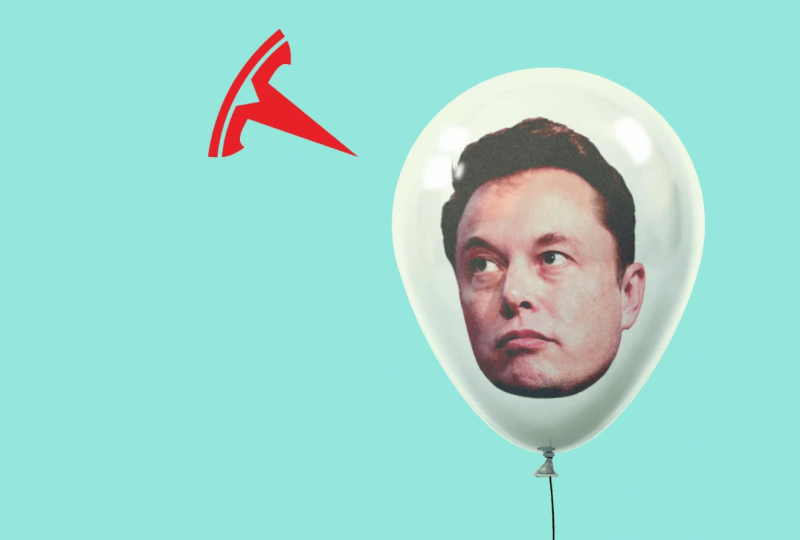
Elon Musk Feels ‘Super Bad’ About Economy, Needs to Cut 10% of Tesla Jobs

Elon Musk, Tesla's CEO, told company executives in an email that he felt "super bad" about the economy and that the company would have to reduce 10% of its jobs.

A number of business leaders recently began warning about the possibility of a recession, and the Tesla CEO's message on Thursday, "Pause all hiring around the world," comes after he told employees to return to work or leave it.

An SEC filing shows that Tesla and its subsidiaries hired almost 100,000 workers at the end of the previous year.

Company representatives were unavailable for comment immediately.

Tesla's shares dropped by approximately 3% in US premarket trade on Friday, and its Frankfurt-listed shares fell by 3.6% following the Reuters report. Nasdaq futures ended lower by 0.6%.

Musk has been warning about recession in recent weeks a lot, but the hiring freeze and staff reductions that he ordered in his email were the most direct and high-profile statements of this kind from an automaker leader.

However, Tesla cars and other electric vehicles have remained in high demand, and many of the indicators associated with a downturn have not materialized, including an increase in dealer inventories and incentives in the US.

However, Tesla has faced difficulties in resuming production at its Shanghai factories after prolonged COVID lockdowns forced expensive outages.

ING's global head of macroeconomic research Carsten Brzeski said Musk's bad feelings are widespread. "This is not about a global economic downturn. By the end of the year, the global economy is expected to slow down. China and Europe are unlikely to recover while the US will cool off."

Musk's grim outlook follows statements made by executives including Jamie Dimon, CEO of JPMorgan Chase, and John Waldron, Goldman Sachs President.

"A hurricane is heading our way, right down the road," Dimon stated earlier.

Americans are experiencing inflation at 40-year highs, increasing the cost of living, and Federal Reserve officials are grappling with how to dampen demand enough to curb inflation without triggering a recession.

Musk, who is the world's richest man according to Forbes, did not elaborate on the reasons for his "super bad feeling" concerning the outlook of the economy in the email obtained by Reuters.

Analysts have recently cut their price targets for Tesla due to slower deliveries being forecasted due to Chinese lockdowns and the loss of production at their Shanghai facility, which has been supplying electric cars to China and for export.

Tesla's published data and disclosures indicate that about a third of its global deliveries were made in China in 2021.

Daniel Ives, an analyst at Wedbush Securities, asserted that Musk and Tesla appear to be "trying to come up ahead of slower deliveries this year and to preserve margins in anticipation of a slower economy."

Prior to Musk's warning, Tesla was advertising about 5,000 jobs on LinkedIn, ranging from sales positions in Tokyo to engineers in Berlin and deep learning scientists in Palo Alto. On June 9, the company was planning an online hiring event through its WeChat account for Shanghai.

In Germany, Musk has already faced backlash over his demand that employees must return to the workplace.

Musk wrote in a Tuesday email that everyone at Tesla must spend at least forty hours at the office each week. "We will assume that you have resigned if you do not appear."

Musk mentioned the possibility of a recession many times in recent remarks.

Speaking at a conference in Miami Beach in mid-May, the Tesla CEO stated: "I believe the world is experiencing a recession right now, and it will only get worse. I don't know how much time it will take for a correction, maybe 12 to 18 months, but it'll be tough for a while."

At the end of the previous month, Musk replied to a Twitter user who asked if the economy was approaching a recession: "Yes, but you should see this as a good thing." He explained that there has been too much money flowing into fools' accounts and that some bankruptcies are necessary.

Musk also had a Twitter dispute on Thursday with Scott Farquhar, an Australian tech billionaire and founder of Atlassian Plc, who mocked the back-to-workplaces mandate as "something out of the 1950s."

Musk responded to Farquhar's tweet encouraging Tesla staff to explore remote work possibilities by tweeting: "recessions serve a vital economic cleansing function."

Jason Stomel, CEO of technology company Cadre, believes that the return-to-workplaces demand may be viewed as a disguised layoff, which may enable the company to get rid of employees through attrition or without actually having to lay anyone off.

"It is clear that Musk knows that a significant number of workers will not return, which would be cheaper since no severance would be required."

Subscribe Our Newsletter
Air Taxi CEO: Fully-Autonomous Plane Market Could Reach $4 Trillion By 2035

Whether you commute by automobile, taxi, or public transit, the hustle-bustle of urban areas may make getting around the city time-consuming and expensive. An advanced air mobility (AAM) firm, Wisk Aero may have the answer — a driverless, electric flying taxi.

Companies
South Korean CBDC – 7 South Korean Banks to Join Issuing The Digital Currency Since cryptocurrencies arrived on the financial scene and changed how people transact and transfer money, central banks have become more interested in developing their own virtual payment systems. After Russia, China, Nigeria, India, and Jamaica, South Korea is taking a major step toward introducing its own Central Bank Digital Currency in an upcoming pilot program involving the public and some major banks. The initiative aims to test the feasibility of a digital currency within the existing financial system, enabling a limited number of citizens to transact with CBDC at selected merchants and Points of Sale. This move aligns with the global trend of central banks exploring digital currencies to enhance payment efficiency, reduce transaction costs, and modernize the financial landscape. South Korea CBDC Pilot Program Bank of Korea (BOK), in collaboration with financial regulators, announced an initiative to test the rolling out of CBDC involving seven major banks and 100,000 participants. The pilot program “Project Hangang” is scheduled to run from April to June 2025, focusing on testing deposit tokens issued by banks and backed by the CBDC. These banks include KB Kookmin Bank, Shinhan Bank, Hana Bank, Woori Bank, NH NongHyup Bank, Industrial Bank of Korea (IBK), and Busan Bank. These tokens will be used for transactions in both online and offline retail environments, allowing the government and financial institutions to evaluate their effectiveness. Users and Merchants Participation The BOK is expected to announce the project by the end of March, asking 100,000 South Koreans to participate in the pilot and convert their traditional bank deposits into digital tokens for payments. Individuals will be limited to a maximum holding of 1 million WON (approximately $687) and a total transaction cap of 5 million WON during the trial’s duration. Various merchants, including convenience stores, supermarkets, coffee shops, and online platforms, will accept these tokens as payment. Notable participants include 7-Eleven, Hanaro Mart, Ediya Coffee, Silla University, and Hyundai Home Shopping. This will help assess the practicality and usability of the CBDC across different retail settings. Global Adoption of CBDC The South Korean CBDC initiative is part of a broader global trend, with many countries exploring digital currencies to modernize their financial systems. The Bank for International Settlements (BIS) has been actively promoting CBDC projects worldwide, with major economies such as China, the European Union, and the United States conducting their own trials. China’s digital Yuan e-CNY is already in an advanced phase, with widespread adoption in various sectors. The European Central Bank is also working on a digital Euro, while the US Federal Reserve is researching the potential implications of a digital Dollar. These initiatives aim to improve payment efficiency, enhance financial inclusion, and strengthen monetary policy frameworks. Conclusion South Korea’s CBDC pilot marks a significant step toward digital financial transformation. By involving the public, key banking institutions, and merchants, the trial will offer critical data on the viability of digital currencies. As more countries explore CBDCs, these findings could influence future implementations worldwide, paving the way for a more efficient payment system.

Hazem

South Korean CBDC – 7 South Korean Banks to Join Issuing The Digital Currency

South Korean CBDC will be tested in a Central Bank-led pilot project involving 100,000 users and 7 issuing banks. Here’s what we know about this project.

Crypto
B2BROKER Liquidity B2BROKER Liquidity
Sponsored
Constantine

Needs and Wants: Key Differences
Learn about needs and wants and the difference between the two.

discover
What is Data Analytics? Techniques, Tools, Methodology, and More

Tamta

What is Data Analytics? Techniques, Tools, Methodology, and More

In today's hyper-connected world, the lifeblood of successful businesses is not just data but the ability to use it effectively. Data analytics has become an indispensable tool in the strategic arsenal of any enterprise aiming to thrive and expand. 

Fintech
Contact us bg

Contact Us

Contact the Liquidity Provider
for any questions and advertising inquiriesb2broker

    Please fill out this contact form to get in touch with us

    / 3000

    By clicking “Get in touch” button, you agree to the privacy policy

    Successful!
    Thank you for your request.
    We will contact you shortly.
    Close

    Deborah Middleton

    Understanding Loan Options for Different Financial Situations

    Understanding Loan Options for Different Financial Situations

    George

    Best XRP Alternatives Under $5 Right Now: Affordable Coins With Real Growth Potential

    Top XRP Alternatives Under $5 (2025): Low-Cost Coins With Big Growth Potential

    Hazem

    MetaTrader vs cTrader: Which Trading Platform Shall You Choose?

    MetaTrader vs cTrader: The Full Breakdown

    Сonstantine

    Will Dogecoin Reach $1? Tokenomics and Price Analysis

    Will Dogecoin Reach 1 Dollar Analysis

    Сonstantine

    How to Get a Crypto Exchange License?

    How to Get Crypto Exchange License

    Сonstantine

    Best Crypto to Buy Now: Guide for Investors

    Best Crypto To Buy Now

    Hazem

    Grok vs ChatGPT: What’s the Best AI Assistant You Need in 2025

    Grok vs ChatGPT

    Сonstantine

    How to Choose the Right Liquidity Provider for Your Brokerage

    How to Choose the Right Liquidity Provider for Your Brokerage

    Сonstantine

    Low-Latency Trading Defined: Speed, Strategy and Technology

    Low-Latency Trading Explained

    Hazem

    How Liquidity Depth Affects Slippage in High-Volume Trading

    Liquidity depth and slippage in trading

    Hazem

    What is FIX API Liquidity Connection and How Does it Power Institutional Trading?

    FIX API in institutional trading

    Сonstantine

    OTC Trading Strategies and Technologies to Succeed in Over-the-Counter Markets

    OTC Trading Strategies

    Alexander

    What is OTC Trading? A Complete Guide for 2025

    what is OTC

    Alexander

    Synthetic Futures: A Trader’s Guide to Replicating Positions with Options

    How to Trade Synthetic Futures

    Сonstantine

    Order Book Depth: What It Is And Why It Matters?

    Order Book Depth What It is And Why It Matters

    Alexander

    Spot vs Perpetual Futures: Which Is Right for You?

    Spot vs Perpetual Futures explained

    Hazem

    5 Reasons Traders Are Switching to Perpetual Futures

    5 Reasons to Switch to Perpetual Futures

    Constantine

    Top 3 Liquidity Challenges Facing New Exchanges and How to Solve Them

    Top 3 Liquidity Challenges Facing New Exchanges Today

    Constantine

    Financial Planning in the Cryptocurrency Era — Master Crypto and Digital Asset Strategies

    Financial Planning in the Cryptocurrency Era

    Hazem

    Best Platforms to Trade Perpetual Futures in 2025

    Best platforms to trade perpetual futures in 2025

    Alex

    Top 10 Fintech Website Development Agencies for 2025

    Best Fintech Website Development Agencies for 2025

    Сonstantine

    Internal vs External Range Liquidity In ICT Trading Explained

    Internal vs External Range Liquidity In ICT Trading

    Constantine

    Portfolio Backtesting — Tools, Metrics, and Methods Explained

    Portfolio Backtesting

    Сonstantine

    ICT Trading Explained: Smart Money Concepts, Tools and Setups

    ICT Trading Explained
    liquidity-provider-logo
    • News
      • Stock Market Forecast
      • Stocks
      • Banks and Finance
      • Companies
      • Crypto
      • Forex
      • AI
      • Technology
      • DeFi
      • NFT
    • Articles
      • Crypto Payments
      • Trading
      • Crypto Exchange Business
      • Forex Business
      • Fintech
      • Liquidity
      • FinTech Awards
      • Blockchain
      • Investing
      • NFT
      • DeFi
    • More
      • Videos
      • Liquidity Providers List
      • Crypto Payment Providers
      • White Label Brokerage Platforms
      • Broker CRM Platforms
    [email protected]

    © 2024 Liquidity Provider. All Rights Reserved

    Privacy Policy Cookie Policy
    This site is registered on wpml.org as a development site. Switch to a production site key to remove this banner.