Relax: Here’s the Bright Side of High Yield Bonds 2023

Oct 04, 2023
Here’s the Bright Side of High Yield

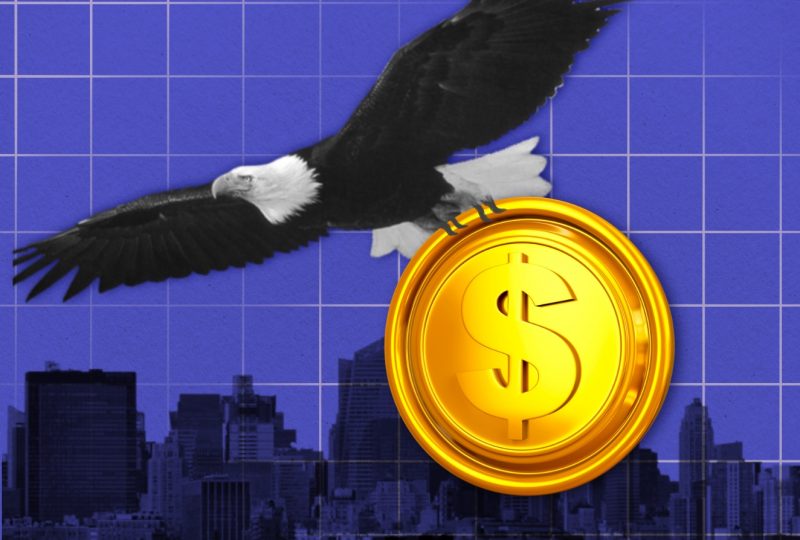
High yield bonds 2023 and the 10-year yield has just reached 4.7%, up from 3.8% in mid-July and less than 1% for much of 2000. Since 2007, this has been the greatest yield. The Federal Reserve and China are both selling Treasury bonds. Furthermore, purchasers are supposed to be suddenly concerned about US debt, so they must be enticed with ever-higher rates.  

Stocks may suffer as a result, according to Goldman Sachs, Morgan Stanley, and J.P. Morgan strategists. BofA Securities’ senior stock strategist, Savita Subramanian, is still optimistic. “Companies have time to sort of adapt to this new higher-rate, higher-inflation environment,” she states. More on that chat later.

Three fast emotional solaces for worried investors: First, while yields are greater, they are not very high. According to statistics from FRED, the Federal Reserve’s economic data arm, the average daily 10-year Treasury yield has been more than a point higher than it is currently — 5.9%. Since 1971, the average 30-year mortgage rate has been 7.7%, compared to 7.3% recently.

The anti-inflation crusade of the early 1980s, when mortgage rates reached 15%, pushed both averages upward. However, they are also dragged down by a considerably longer period from the global financial crisis to early last year, when the Treasury had to adjust its software to allow for negative-yield bidding on T-bill auctions. According to monetary historians, long rates are recovering from a 5,000-year low. So who is to determine what is normal? However, yields today are definitely trending toward normal, not away from it.

Second, that’s fantastic. Bond rates must be reasonable for savers to adequately diversify their holdings. Otherwise, they may purchase bizarre items, such as cartoon ape faces, and then convince themselves that the cartoons are valuable because they are NFTs, or non-fungible tokens — engineered digital scarcity enabled by the blockchain, which is something-something the future of money or something. And before you know it, the headline in the New York Post will read, “NYC Man Sells Fart for $85, Cashing in on NFT Craze.” That is exactly what occurred. It was less than three years ago.

Third, rising yields do not have to hurt stock investors. According to BofA Securities, inflation-adjusted bond rates were higher than currently on average from 1985 to 2005, and equities returned 15% per year over that time period. Subramanian, the firm’s head of US equity, is unconcerned about recent stock market selling. She claims that 5% market pullbacks have occurred three times each year on average since the 1920s.

Just as the majority of US mortgage holders have locked in low fixed rates, US corporations have purchased time to respond to increasing rates.

“Floating rate risk has been cut in at least half since 2007, and close to 80% of debt sitting on corporate balance sheets for the S&P 500 is fixed rate,” Subramanian states. She emphasizes that, unlike fixed income, businesses can adapt to changing situations. They’re adopting artificial intelligence and automation, for example, to become more efficient, which might help them control both their costs and broader labor inflation.

Barring a recession, mass layoffs, or a super spike in the oil price, the second quarter of this year is likely to mark the low point for S&P 500 earnings growth, with earnings gains picking up over the next one to two years, says Subramanian.

She asserted that the next narrative for margins may not be cost cutting, globalization, or cheap capital.However, it is possible that the focus will be on increased efficiency and more enduring operational improvements.

The latest year-end S&P 500 projection from BofA is 4600, representing a 9% increase from current levels. We’ll see what happens.The clearest call to action appears to be for investors who deserted high yield bonds 2023  for money markets, or worse, to return to a reasonable bond allocation. A 10-year inflation-adjusted Treasury yielded 2.3% lately, which is hardly cause to sell equities but is definitely better than an ape face.

Subscribe Our Newsletter

Stock Market Predictions 2024: All About These Raising 7 Stocks

Milena

Stock Market Predictions 2024: Everything You Should Know About These Raising 7 Stocks

After a disastrous 2022, the main fuel for the 2023 stock bounce began in the first quarter making promising stock market predictions 2024.

Stock Market Forecast
South Korean CBDC – 7 South Korean Banks to Join Issuing The Digital Currency Since cryptocurrencies arrived on the financial scene and changed how people transact and transfer money, central banks have become more interested in developing their own virtual payment systems. After Russia, China, Nigeria, India, and Jamaica, South Korea is taking a major step toward introducing its own Central Bank Digital Currency in an upcoming pilot program involving the public and some major banks. The initiative aims to test the feasibility of a digital currency within the existing financial system, enabling a limited number of citizens to transact with CBDC at selected merchants and Points of Sale. This move aligns with the global trend of central banks exploring digital currencies to enhance payment efficiency, reduce transaction costs, and modernize the financial landscape. South Korea CBDC Pilot Program Bank of Korea (BOK), in collaboration with financial regulators, announced an initiative to test the rolling out of CBDC involving seven major banks and 100,000 participants. The pilot program “Project Hangang” is scheduled to run from April to June 2025, focusing on testing deposit tokens issued by banks and backed by the CBDC. These banks include KB Kookmin Bank, Shinhan Bank, Hana Bank, Woori Bank, NH NongHyup Bank, Industrial Bank of Korea (IBK), and Busan Bank. These tokens will be used for transactions in both online and offline retail environments, allowing the government and financial institutions to evaluate their effectiveness. Users and Merchants Participation The BOK is expected to announce the project by the end of March, asking 100,000 South Koreans to participate in the pilot and convert their traditional bank deposits into digital tokens for payments. Individuals will be limited to a maximum holding of 1 million WON (approximately $687) and a total transaction cap of 5 million WON during the trial’s duration. Various merchants, including convenience stores, supermarkets, coffee shops, and online platforms, will accept these tokens as payment. Notable participants include 7-Eleven, Hanaro Mart, Ediya Coffee, Silla University, and Hyundai Home Shopping. This will help assess the practicality and usability of the CBDC across different retail settings. Global Adoption of CBDC The South Korean CBDC initiative is part of a broader global trend, with many countries exploring digital currencies to modernize their financial systems. The Bank for International Settlements (BIS) has been actively promoting CBDC projects worldwide, with major economies such as China, the European Union, and the United States conducting their own trials. China’s digital Yuan e-CNY is already in an advanced phase, with widespread adoption in various sectors. The European Central Bank is also working on a digital Euro, while the US Federal Reserve is researching the potential implications of a digital Dollar. These initiatives aim to improve payment efficiency, enhance financial inclusion, and strengthen monetary policy frameworks. Conclusion South Korea’s CBDC pilot marks a significant step toward digital financial transformation. By involving the public, key banking institutions, and merchants, the trial will offer critical data on the viability of digital currencies. As more countries explore CBDCs, these findings could influence future implementations worldwide, paving the way for a more efficient payment system.

Hazem

South Korean CBDC – 7 South Korean Banks to Join Issuing The Digital Currency

South Korean CBDC will be tested in a Central Bank-led pilot project involving 100,000 users and 7 issuing banks. Here’s what we know about this project.

Crypto
B2BROKER Liquidity B2BROKER Liquidity
Sponsored
Alexander

Buy Side Liquidity And Sell Side Liquidity: What Are They?
Explore the dynamics of buy side liquidity and sell side liquidity and uncover how institutions guide price movements.

discover
A Beginner Guide To The Crypto Analysis Tools.

Anna

A Beginner Guide To The Crypto Analysis Tools.

Successful investment in the crypto world requires constantly studying market trends, monitoring specialized forums and social networks, and conducting technical analysis.

Fintech
Contact us bg

Contact Us

Contact the Liquidity Provider
for any questions and advertising inquiriesb2broker

    Please fill out this contact form to get in touch with us

    / 3000

    By clicking “Get in touch” button, you agree to the privacy policy

    Successful!
    Thank you for your request.
    We will contact you shortly.
    Close

    Deborah Middleton

    Understanding Loan Options for Different Financial Situations

    Understanding Loan Options for Different Financial Situations

    George

    Best XRP Alternatives Under $5 Right Now: Affordable Coins With Real Growth Potential

    Top XRP Alternatives Under $5 (2025): Low-Cost Coins With Big Growth Potential

    Hazem

    MetaTrader vs cTrader: Which Trading Platform Shall You Choose?

    MetaTrader vs cTrader: The Full Breakdown

    Сonstantine

    Will Dogecoin Reach $1? Tokenomics and Price Analysis

    Will Dogecoin Reach 1 Dollar Analysis

    Сonstantine

    How to Get a Crypto Exchange License?

    How to Get Crypto Exchange License

    Сonstantine

    Best Crypto to Buy Now: Guide for Investors

    Best Crypto To Buy Now

    Hazem

    Grok vs ChatGPT: What’s the Best AI Assistant You Need in 2025

    Grok vs ChatGPT

    Сonstantine

    How to Choose the Right Liquidity Provider for Your Brokerage

    How to Choose the Right Liquidity Provider for Your Brokerage

    Сonstantine

    Low-Latency Trading Defined: Speed, Strategy and Technology

    Low-Latency Trading Explained

    Hazem

    How Liquidity Depth Affects Slippage in High-Volume Trading

    Liquidity depth and slippage in trading

    Hazem

    What is FIX API Liquidity Connection and How Does it Power Institutional Trading?

    FIX API in institutional trading

    Сonstantine

    OTC Trading Strategies and Technologies to Succeed in Over-the-Counter Markets

    OTC Trading Strategies

    Alexander

    What is OTC Trading? A Complete Guide for 2025

    what is OTC

    Alexander

    Synthetic Futures: A Trader’s Guide to Replicating Positions with Options

    How to Trade Synthetic Futures

    Сonstantine

    Order Book Depth: What It Is And Why It Matters?

    Order Book Depth What It is And Why It Matters

    Alexander

    Spot vs Perpetual Futures: Which Is Right for You?

    Spot vs Perpetual Futures explained

    Hazem

    5 Reasons Traders Are Switching to Perpetual Futures

    5 Reasons to Switch to Perpetual Futures

    Constantine

    Top 3 Liquidity Challenges Facing New Exchanges and How to Solve Them

    Top 3 Liquidity Challenges Facing New Exchanges Today

    Constantine

    Financial Planning in the Cryptocurrency Era — Master Crypto and Digital Asset Strategies

    Financial Planning in the Cryptocurrency Era

    Hazem

    Best Platforms to Trade Perpetual Futures in 2025

    Best platforms to trade perpetual futures in 2025

    Alex

    Top 10 Fintech Website Development Agencies for 2025

    Best Fintech Website Development Agencies for 2025

    Сonstantine

    Internal vs External Range Liquidity In ICT Trading Explained

    Internal vs External Range Liquidity In ICT Trading

    Constantine

    Portfolio Backtesting — Tools, Metrics, and Methods Explained

    Portfolio Backtesting

    Сonstantine

    ICT Trading Explained: Smart Money Concepts, Tools and Setups

    ICT Trading Explained
    liquidity-provider-logo
    • News
      • Stock Market Forecast
      • Stocks
      • Banks and Finance
      • Companies
      • Crypto
      • Forex
      • AI
      • Technology
      • DeFi
      • NFT
    • Articles
      • Crypto Payments
      • Trading
      • Crypto Exchange Business
      • Forex Business
      • Fintech
      • Liquidity
      • FinTech Awards
      • Blockchain
      • Investing
      • NFT
      • DeFi
    • More
      • Videos
      • Liquidity Providers List
      • Crypto Payment Providers
      • White Label Brokerage Platforms
      • Broker CRM Platforms
    [email protected]

    © 2024 Liquidity Provider. All Rights Reserved

    Privacy Policy Cookie Policy
    This site is registered on wpml.org as a development site. Switch to a production site key to remove this banner.