Shiba Inu Continues Its Rise. Bitcoin and Ethereum Are Still Looking Cheap, Analyst Says

Nov 7, 2021
Shiba Inu Continues to Rise, Bitcoin and Ethereum are still Looking Cheap

On Friday, the Shiba Inu cryptocurrency skyrocketed, rising as much as 29 percent on speculation that Robinhood Markets will include it on its trading platform.

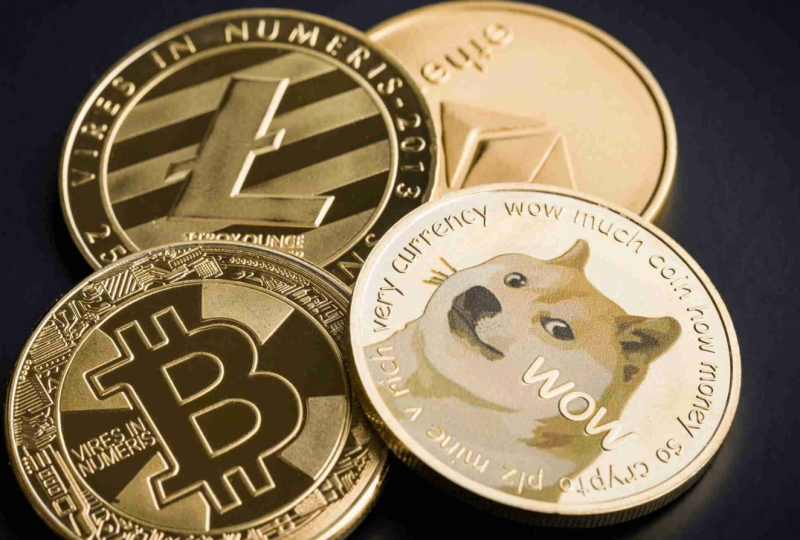
The Shiba currency, also known as SHIB, is now within striking distance of Dogecoin, which has a market valuation of $34 billion, for the title of top "meme" crypto. According to CoinMarketCap, SHIB was recently trading at $0.00005708 on a 24-hour volume of $10.3 billion.

SHIB has been on a fire since it was listed on the Coinbase Global (ticker: COIN) exchange in late September. For SHIB tokens switched with Tether, a stablecoin (pegged in value to $1), Coinbase now accounts for 12 percent of volume, trailing market leader Binance by 32 percent.

SHIB had fallen back from highs in late October, but it now appears to be on another surge in the hopes of becoming listed on Robinhood (HOOD). Dogecoin is already listed on Robinhood among major cryptocurrencies such as Bitcoin and Ethereum. A petition on Change.org to include SHIB has received 497,000 signatures from the so-called SHIB army. SHIB was mentioned in a multiple-choice question on crypto projects on Instagram recently, which could be fuelling interest.

SHIB has not been committed to be listed on Robinhood, which does not charge upfront trading commissions. On a teleconference with analysts last week, the company stated, "We're having to carefully evaluate whether we can add additional coins in a way that's safe for customers and in line with regulatory regulations."

A request for comment from Robinhood was not immediately returned.

Social media is a major driver of SHIB and Dogecoin. Dogecoin, one of the earliest meme tokens, began as a joke and spawned legions of clones after it suddenly took off, owing in part to Tesla CEO Elon Musk's tweets and other nudges.

More importantly, several analysts believe that Bitcoin and Ethereum, the two most popular cryptos, are still undervalued based on numerous valuation metrics.

According to Sean Farrell, head of digital asset strategy at Fundstrat Digital Asset Research, bitcoin still seems inexpensive relative to traditional equities markets, despite a roughly 50% run since late September.

Farrell compares Bitcoin to stocks using a variation of price-to-book value. He relates the cost of mining or processing transactions on the network to the price of Bitcoin, using miner profits as a proxy for their hardware and energy expenses.

He told Barron's, "We've seen Bitcoin grow into hot area and speculative price activity." “We believe there is opportunity for expansion before we approach that speculative region, based on where the multiple is now.”

Bitcoin's "price to book" appears to be beneficial in compared to S&P 500 sectors, with Bitcoin selling at approximately the same multiple as utilities and below sectors like technology and financials, according to Farrell.

"If you believe that the price/book ratio for Bitcoin is a credible indicator, you can compare it to stocks on an apples to apples basis," he explains.

On the same scale, Ethereum appears to be cheap, he claims. And the network has some strong fundamentals. The first is that transaction volume has risen in recent weeks. With 750,000 Ethereum tokens "burned," or pulled out of circulation, since early August, supply dynamics appear to be improving. That's when the Ethereum network received an upgrade that changed the fees provided to miners, with a portion of their base fees being burned—much like retiring a company's outstanding shares.

Ethereum tokens have been burned, removing $3.5 billion in supply from circulation. And, for the first time, net issuance of Ethereum tokens went negative last week, establishing a deflationary dynamic.

When you add it all together, he believes Bitcoin will exceed $100,000 by the end of the year, up from recent lows of $61,000. From existing prices of $4,490, he predicts Ethereum to reach $10,500.

"With Bitcoin, Ethereum, and other crypto assets, time in the market is more essential than timing," he argues. "When they move, they move quickly, and these assets don't take long to get traction." The current monetary and equities markets point to favorable conditions for crypto price appreciation."

Subscribe Our Newsletter

Snowden Says Competing Nations Now Under Pressure to Acquire Bitcoin

Edward Snowden claims that "competing governments are now under pressure to purchase bitcoin - even if merely as a reserve asset."

Crypto
South Korean CBDC – 7 South Korean Banks to Join Issuing The Digital Currency Since cryptocurrencies arrived on the financial scene and changed how people transact and transfer money, central banks have become more interested in developing their own virtual payment systems. After Russia, China, Nigeria, India, and Jamaica, South Korea is taking a major step toward introducing its own Central Bank Digital Currency in an upcoming pilot program involving the public and some major banks. The initiative aims to test the feasibility of a digital currency within the existing financial system, enabling a limited number of citizens to transact with CBDC at selected merchants and Points of Sale. This move aligns with the global trend of central banks exploring digital currencies to enhance payment efficiency, reduce transaction costs, and modernize the financial landscape. South Korea CBDC Pilot Program Bank of Korea (BOK), in collaboration with financial regulators, announced an initiative to test the rolling out of CBDC involving seven major banks and 100,000 participants. The pilot program “Project Hangang” is scheduled to run from April to June 2025, focusing on testing deposit tokens issued by banks and backed by the CBDC. These banks include KB Kookmin Bank, Shinhan Bank, Hana Bank, Woori Bank, NH NongHyup Bank, Industrial Bank of Korea (IBK), and Busan Bank. These tokens will be used for transactions in both online and offline retail environments, allowing the government and financial institutions to evaluate their effectiveness. Users and Merchants Participation The BOK is expected to announce the project by the end of March, asking 100,000 South Koreans to participate in the pilot and convert their traditional bank deposits into digital tokens for payments. Individuals will be limited to a maximum holding of 1 million WON (approximately $687) and a total transaction cap of 5 million WON during the trial’s duration. Various merchants, including convenience stores, supermarkets, coffee shops, and online platforms, will accept these tokens as payment. Notable participants include 7-Eleven, Hanaro Mart, Ediya Coffee, Silla University, and Hyundai Home Shopping. This will help assess the practicality and usability of the CBDC across different retail settings. Global Adoption of CBDC The South Korean CBDC initiative is part of a broader global trend, with many countries exploring digital currencies to modernize their financial systems. The Bank for International Settlements (BIS) has been actively promoting CBDC projects worldwide, with major economies such as China, the European Union, and the United States conducting their own trials. China’s digital Yuan e-CNY is already in an advanced phase, with widespread adoption in various sectors. The European Central Bank is also working on a digital Euro, while the US Federal Reserve is researching the potential implications of a digital Dollar. These initiatives aim to improve payment efficiency, enhance financial inclusion, and strengthen monetary policy frameworks. Conclusion South Korea’s CBDC pilot marks a significant step toward digital financial transformation. By involving the public, key banking institutions, and merchants, the trial will offer critical data on the viability of digital currencies. As more countries explore CBDCs, these findings could influence future implementations worldwide, paving the way for a more efficient payment system.

Hazem

South Korean CBDC – 7 South Korean Banks to Join Issuing The Digital Currency

South Korean CBDC will be tested in a Central Bank-led pilot project involving 100,000 users and 7 issuing banks. Here’s what we know about this project.

Crypto
B2BROKER Liquidity B2BROKER Liquidity
Sponsored
Oliver

What is the Ethereum Merge, And How Will it Change Ethereum?
The "Merge" of Ethereum, which supporters claim will improve the asset's value in the long term and substantially change the future of cryptocurrency, was a largely anticipated and historic moment in the crypto world.

discover
A Guide to Mastering BscScan

Levan

Why You Should Adopt BSscan in Your Crypto Operations

Binance developed BscScan to simplify navigating their BSC ecosystem. Here’s what you can do with this comprehensive blockchain explorer.

Crypto Exchange Business
Contact us bg

Contact Us

Contact the Liquidity Provider
for any questions and advertising inquiriesb2broker

    Please fill out this contact form to get in touch with us

    / 3000

    By clicking “Get in touch” button, you agree to the privacy policy

    Successful!
    Thank you for your request.
    We will contact you shortly.
    Close

    Deborah Middleton

    Understanding Loan Options for Different Financial Situations

    Understanding Loan Options for Different Financial Situations

    Constantin

    How to Create a Website for a Liquidity Provider: Guide 2026

    Create website for liquidity provider

    George

    Best XRP Alternatives Under $5 Right Now: Affordable Coins With Real Growth Potential

    Top XRP Alternatives Under $5 (2025): Low-Cost Coins With Big Growth Potential

    Hazem

    MetaTrader vs cTrader: Which Trading Platform Shall You Choose?

    MetaTrader vs cTrader: The Full Breakdown

    Сonstantine

    Will Dogecoin Reach $1? Tokenomics and Price Analysis

    Will Dogecoin Reach 1 Dollar Analysis

    Сonstantine

    How to Get a Crypto Exchange License?

    How to Get Crypto Exchange License

    Сonstantine

    Best Crypto to Buy Now: Guide for Investors

    Best Crypto To Buy Now

    Hazem

    Grok vs ChatGPT: What’s the Best AI Assistant You Need in 2025

    Grok vs ChatGPT

    Сonstantine

    How to Choose the Right Liquidity Provider for Your Brokerage

    How to Choose the Right Liquidity Provider for Your Brokerage

    Сonstantine

    Low-Latency Trading Defined: Speed, Strategy and Technology

    Low-Latency Trading Explained

    Hazem

    How Liquidity Depth Affects Slippage in High-Volume Trading

    Liquidity depth and slippage in trading

    Hazem

    What is FIX API Liquidity Connection and How Does it Power Institutional Trading?

    FIX API in institutional trading

    Сonstantine

    OTC Trading Strategies and Technologies to Succeed in Over-the-Counter Markets

    OTC Trading Strategies

    Alexander

    What is OTC Trading? A Complete Guide for 2025

    what is OTC

    Alexander

    Synthetic Futures: A Trader’s Guide to Replicating Positions with Options

    How to Trade Synthetic Futures

    Сonstantine

    Order Book Depth: What It Is And Why It Matters?

    Order Book Depth What It is And Why It Matters

    Alexander

    Spot vs Perpetual Futures: Which Is Right for You?

    Spot vs Perpetual Futures explained

    Hazem

    5 Reasons Traders Are Switching to Perpetual Futures

    5 Reasons to Switch to Perpetual Futures

    Constantine

    Top 3 Liquidity Challenges Facing New Exchanges and How to Solve Them

    Top 3 Liquidity Challenges Facing New Exchanges Today

    Constantine

    Financial Planning in the Cryptocurrency Era — Master Crypto and Digital Asset Strategies

    Financial Planning in the Cryptocurrency Era

    Hazem

    Best Platforms to Trade Perpetual Futures in 2025

    Best platforms to trade perpetual futures in 2025

    Alex

    Top 10 Fintech Website Development Agencies for 2025

    Best Fintech Website Development Agencies for 2025

    Сonstantine

    Internal vs External Range Liquidity In ICT Trading Explained

    Internal vs External Range Liquidity In ICT Trading

    Constantine

    Portfolio Backtesting — Tools, Metrics, and Methods Explained

    Portfolio Backtesting
    liquidity-provider-logo
    • News
      • Stock Market Forecast
      • Stocks
      • Banks and Finance
      • Companies
      • Crypto
      • Forex
      • AI
      • Technology
      • DeFi
      • NFT
    • Articles
      • Crypto Payments
      • Trading
      • Crypto Exchange Business
      • Forex Business
      • Fintech
      • Liquidity
      • FinTech Awards
      • Blockchain
      • Investing
      • NFT
      • DeFi
    • More
      • Videos
      • Liquidity Providers List
      • Crypto Payment Providers
      • White Label Brokerage Platforms
      • Broker CRM Platforms
    [email protected]

    © 2024 Liquidity Provider. All Rights Reserved

    Privacy Policy Cookie Policy Website developed by WSA.design
    This site is registered on wpml.org as a development site. Switch to a production site key to remove this banner.